The Andrews state government has been making some of the right noises but this move by ESC( Essential Services Commission) shows loud attention is needed to reverse this kind of nasty bias against renewables.
>more> RenewEconomy
The Andrews state government has been making some of the right noises but this move by ESC( Essential Services Commission) shows loud attention is needed to reverse this kind of nasty bias against renewables.
>more> RenewEconomy
Members of Andrew’s government are making many of the right noises about how to implement more renewable energy. But without input from you, your friends and the rest of the electorate, there will be less action. Please, ASAP, let them know you support their efforts.
>more> Yes2Renewables
With the absence of coherent climate change policy from the Abbott government, Victoria, South Australia and the ACT are picking up the gauntlet….Unlike Abbott, these states can see the economic benefit of investing in the future. Renewable energy and other emerging technologies are part of the future, offering jobs and growth in a new economy.
>more> Sourceable
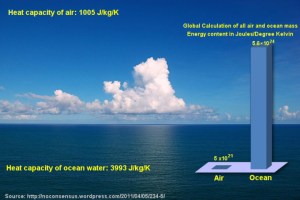 As deniers persist in denying evidence of warming, here’s a useful explanation about where most of the energy goes, with variability to atmosphere temperature during the journey.
>more> WattsUpWithThat
Now here’s a stranded asset for you, until recently, almost hallowed ground. With the likes of GE Finance behind it, wouldn’t you think they’d make PV panels a continuous roof, rainwater collection, elevated, with accommodation underneath which might even be affordable.
>more> Sourceable
New research and analysis about severity and probability of drastic El Nino. Also false economy of having reduced foreign aid to jus 34% of our commitment to Millennium Development Goals.
>more> TheConcversation
Total collapse of vulnerable parts of West Antarctica’s ice sheets would raise sea levels by at least 3 metres. The possibility of this happening has now moved from the hypothetical to an unfortunate reality. The best we can now hope for is that this collapse will be slow and stately, and take centuries to unfold…Given we’ve made so little progress on limiting our global carbon emissions, odds are that ice-sheet collapse will only accelerate. Those of us who study climate history are confident that once this sort of collapse begins, it will not stop. If not, then we’re witnessing beginning of destruction of $Trillions worth of coastal infrastructure. You can be sure the insurance industry is paying attention. How long will it be before property less than 5 metres above sea level is uninsurable?
>more> TheConversation
“…Iran, a city adjacent to the Persian Gulf, the heat index soared to 73 degrees “as a heatwave continued to bake the Middle East, already one of the hottest places on Earth…An Iraqi government was sacked over its failure to deliver airconditioning.”
From New York Post’s Thomas Friedman, after 4 years of drought and crop failure, Syrians only resort was to move to cities. Government reception was hostility. World crop crises and crippling reductions in foreign aid budgets had all added to complete chaos. Yemen and Iraq share similar problems. Out of control pain, suffering and even cost. How will jet fighter bombers help?
>more> TheAge
Despite gushing press release announcing reduced bills picked up uncritically by local media, real horror is the impact on low energy users, single person households, pensioners and solar and energy efficient households in particular. We thought at the time that impact translated into an effective rate of more than 40c/kWh for those low energy users. We were wrong. For energy hogs, on the other hand, significant cuts. A household guzzling 10MWh a year, presumably with air con and pool pumps, are paying an effective rate of just 29c/kWh.
>more> OneStepOffTheGrid
…areas expected to have the greatest conversion of land use for agriculture — from forest to land dedicated to livestock production — 15 were in “megadiverse” countries that have the greatest diversity of species. The study concludes that in the 15 “megadiverse countries,” land used for livestock production will likely increase by 30 to 50 percent — some 3,000,000 square kilometers (about 741 million acres). “These changes will have major, negative impacts on biodiversity,” Brian Machovina, the study’s lead author, told Science. “Many, many species will be lost.”
>more> ThinkProgress
Why rent a lawyer when you can buy a judge
A blog by Julian Cribb
Learning Instrumentation and Control System based on case study
Sharing solutions that make the climate safer and our communities more liveable
Just another WordPress.com site with thoughts by Marcus Ampe
with Peter Sinclair
Writing about writing and the News Media.
Or why the world is going to hell
News and analysis for the clean energy economy
 groundswell bass coast climate change renewable energy